Key Issue: Cost of Coverage
Spotlight on Affordability
80% of Pennsylvania’s uninsured are concerned about medical debt or financial crisis resulting from illness or injury, and 60% find Pennie’s plans unaffordable.
Pennie provides education on how premium costs affect Pennsylvanians, helping to shape health insurance affordability policies.

Ensuring Access to Affordable, High-quality Coverage
Federal Premium Tax Credits have been an important aspect of affordability for marketplace enrollees since the adoption of the Affordable Care Act. Premium tax credits lower the cost of private health plans available through the marketplace and are based on income and household size.
Since 2021, Enhanced Premium Tax Credits (EPTC) totaling $600 million annually in Pennsylvania alone made coverage more affordable than ever for enrollees. As a result, Pennie saw enrollment increase by 50% from 2021 to 2025. Pennie enrollment reached its highest point at half a million total enrollees in 2025. The enhanced tax credits expired at the end of 2025, and Pennie enrollees saw costs double on average to keep their plan in 2026.
Open enrollment 2026 ended on January 31, 2026, and an unprecedented 85,000 Pennie enrollees made the choice to leave coverage offered through Pennie. Many of these individuals are now uninsured. The terminated population cited the loss of the enhanced tax credits and increased premiums as the primary reason for leaving, and the number leaving continues to grow.
Affordable and accessible health insurance for all eligible Pennsylvanians remains a top priority for Pennie
Click the button below to learn about the State Affordability Program
2026 Post-OE Data and Impact
Updated (October 6, 2026)
Individuals Enrolled in Pennie as of October 1, 2026
Enrollees Dropped Coverage Since the End of OE 2026 (January 31, 2026)
Individuals canceled coverage including during OE 2026
Total Terminations by Age Band: Through 10/1/2026
Total Terminations by Income: Through 10/1/2026
Enrollment and Termination Data by Location
(Coming soon: Congressional District Maps)
County Data (October 1, 2026)
Click county to see details.
Open Enrollment 2026: Data and Impacts
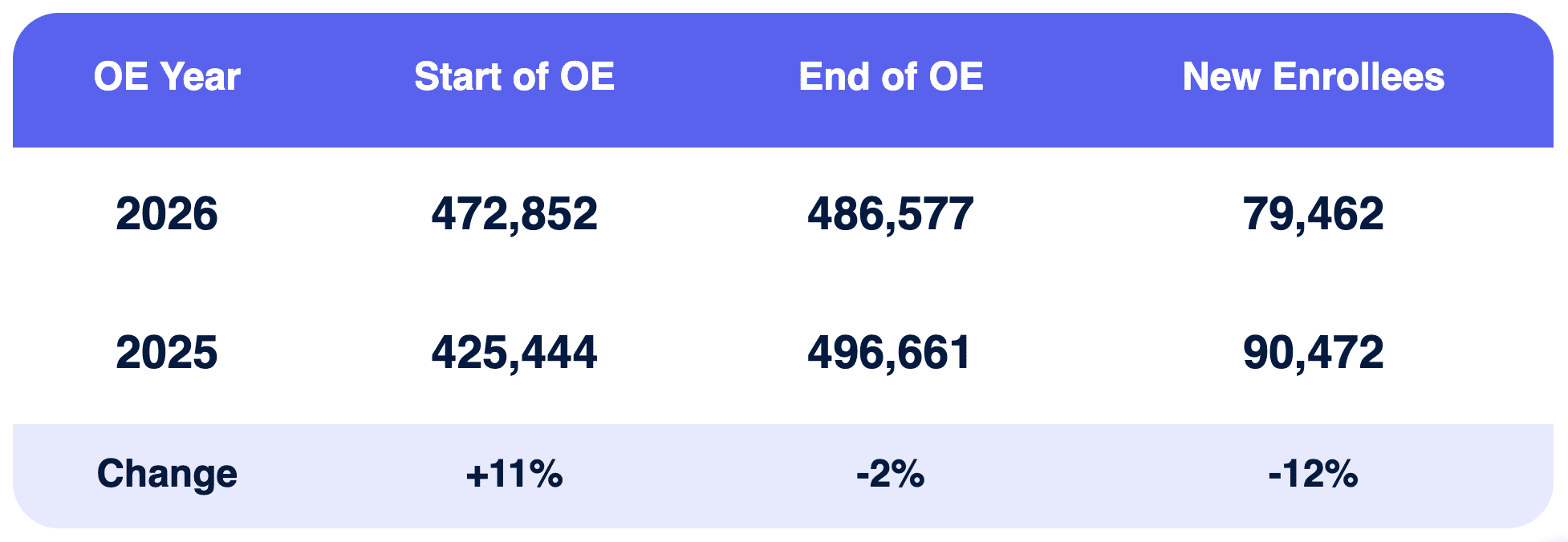
Open Enrollment 2025 v. 2026 Key Takeaways
- During 2026 open enrollment, Pennie saw a 12% decrease in new enrollments compared to 2025.
- A record 85,000 enrollees terminated coverage throughout open enrollment.
- On average, nearly 1,000 Pennsylvanians dropped Pennie coverage each day during open enrollment.
- Compared to 2025, Pennie ended 2026 open enrollment with 2% less enrollees.
Terminations by County During Open Enrollment 2026
UPDATED: February 1, 2026
NOTE: Open enrollment closed January 31, 2026.This data reflects point-in-time enrollment information. Check back for future updates.
The Cost of Losing Enhanced Premium Tax Credits for 2026
Impacts of Enhanced Premium Tax Credit Expiration
- The expiration of enhanced premium tax credits drove costs higher leading to 85,000 leaving Pennie coverage.
- On average, premiums increased by 102%.
- See cost increase percentages by county.
- See cost increases by dollar amount by county.
- See cost increases by income.
- See letters to Pennsylvania members of the House and Senate on impacts (June 2025: House and Senate; Sept 2024: House and Senate)
Recent News and Statements on Affordability
NOTE: These are external links. By clicking on them you will be leaving Pennie’s website. Links to other websites are provided solely for the convenience of the user and do not constitute an endorsement or recommendation of those websites.
Report: Majority of ACA enrollees are cutting back on food to afford health insurance
The Cost of Eliminating the Enhanced Premium Tax Credits
Impact to Small Business Owners (Stateline)
The State Health Insurance Affordability Program
In total, Pennsylvania lost $600 million in premium tax credits with the expiration of the Enhanced Premium Tax Credits at the end of 2025. As a result, Pennsylvanians have left coverage through Pennie at record numbers. Pennie surveyed the terminated population who cited cost as the top reason for leaving coverage. Fortunately, Pennsylvania has a solution, which has already been enacted, but requires funding, the State Health Insurance Exchange Affordability Program.
Act 54 of 2024, the Fiscal Code for Budget Year 2024-25, established the State Health Insurance Exchange Affordability Program. Once funded, this program will provide premium assistance to eligible Pennsylvanians, making coverage more affordable. Pennie continues to engage with lawmakers and stakeholders, highlighting the importance of funding this program and the significant benefits it will deliver to Pennsylvanians.
Benefits of Funding the State Affordability Program
- For the investment of $50 million, which is 1/12 of the cost of the expired federal tax credits, nearly one-fourth of individuals who terminated coverage, will be able to return to Pennie.
- More than 280,00 current and new enrollees will see reduced costs.
- The program will help current and future enrollees buy up to higher levels of coverage, resulting in $1000s in savings per year.
- The additional financial support will reduce the average premium by 9% to 12%.
Learn more about what our partners are saying about the need for a state subsidy program:
https://pahealthaccess.org/pa-organizations-release-letter-in-support-of-pennie-subsidies/